The 26th CSI sugar conference, held at the Mohammed VI Museum for the Civilization of Water from 9-12 February, centred on how the global sugar industry is adapting to a rapidly changing operating environment shaped by digitalisation and artificial intelligence, along with process efficiency and sustainability as central pillars of future competitiveness. On the fourth day, Cosumar welcomed delegates for a tour of their Sidi Benour refinery. The event attracted 172 delegates from 32 countries. It certainly deserved more. The event was widely praised by the delegates attending. The following review is structured to clarify transitions between the main themes discussed during the event. The first major theme was digitisation across both operations and agriculture, each following distinct but related approaches to efficiency and resilience.
On the first day, digitisation featured prominently. The presentations focused on factory optimisation and rapidly advancing digital agriculture. Together, they illustrated how data-driven approaches are reshaping different parts of the sugar value chain through complementary, but not identical, priorities.
Factory
The factory-focused session opened with Siemens’ Amitha Asokkumar, who described digitalisation as the progression from conventional automation to integrated operational intelligence. The emphasis lay in connecting existing control systems with higher-level analytics through IT–OT convergence, digital twins and cloud-enabled monitoring. By transforming process data into actionable insights, mills can improve energy efficiency, stabilise operations and introduce predictive maintenance, shifting plant management from reactive intervention toward anticipatory control. The future may be a 24/7 fully automated ‘dark factory’ without human presence, not requiring lights, heating nor air conditioning.
Wolfgang Klosterhalfen showcased Sucrosphere, which he and his colleagues at Pfeifer & Langen developed, by creating an AI roadmap for a sugar plant. He emphasized that digital transformation occurs incrementally. Instead of making large technological leaps, gains come from better instrumentation, clearer process transparency, and decision-support tools that help operators understand process variability. He framed digitalisation as an operational discipline in daily practice, not as a one-time upgrade.
Désirée Lee’s (Armis) cybersecurity presentation introduced an important counterbalance. Increased connectivity also expands operational risk. As enterprise systems and process controls become more integrated, cyber incidents can directly disrupt production campaigns. The presentation said cybersecurity must evolve with digitalisation. Network segmentation, controlled access, and operational contingency planning are now essential for modern mill management.
The sector’s vulnerability stems from several structural characteristics. Seasonal campaign pressure creates narrow operational windows in which downtime is exceptionally costly, while mills must maintain near-continuous availability and cannot easily suspend operations for system updates. At the same time, increasing convergence between operational technology (OT) and enterprise IT systems, linking PLCs, SCADA platforms, historians, and ERP software, has created complex, often poorly mapped attack surfaces. Geographic dispersion across fields, intake systems, mills and export logistics further multiplies potential entry points.
The presentation emphasised that threats facing sugar processors are highly specific rather than generic cyber risks. Ransomware targeting scheduling or ERP systems can disrupt cane intake coordination, rapidly cascading into supply chain failures. More concerning are OT-level attacks that manipulate control logic or sensor signals, which may force mills into manual operation or create safety hazards. Supply-chain vulnerabilities were also highlighted, particularly where automation vendors or laboratory systems maintain remote access to production environments. Shared operator credentials and poorly controlled contractor access remain common entry vectors.
Illustrative scenarios reinforced how such incidents unfold in practice. A compromised automation system during a campaign could require emergency manual operation with sharply reduced throughput; altered weighbridge data could trigger commercial disputes over deliveries; and abused vendor access channels could enable persistent infiltration of operational systems. These examples underscore the interconnected nature of modern sugar operations, in which disruptions originating outside the factory often propagate inward.
A diagram shown mid-session mapped the industry’s cyber risk across four interconnected zones: enterprise IT systems, external connections such as contractors and ports, mill and refinery control systems, and field-level infrastructure like sensors and weighbridges. The main takeaway was that most attacks originate at organisational boundaries, not in core process control environments.
Field
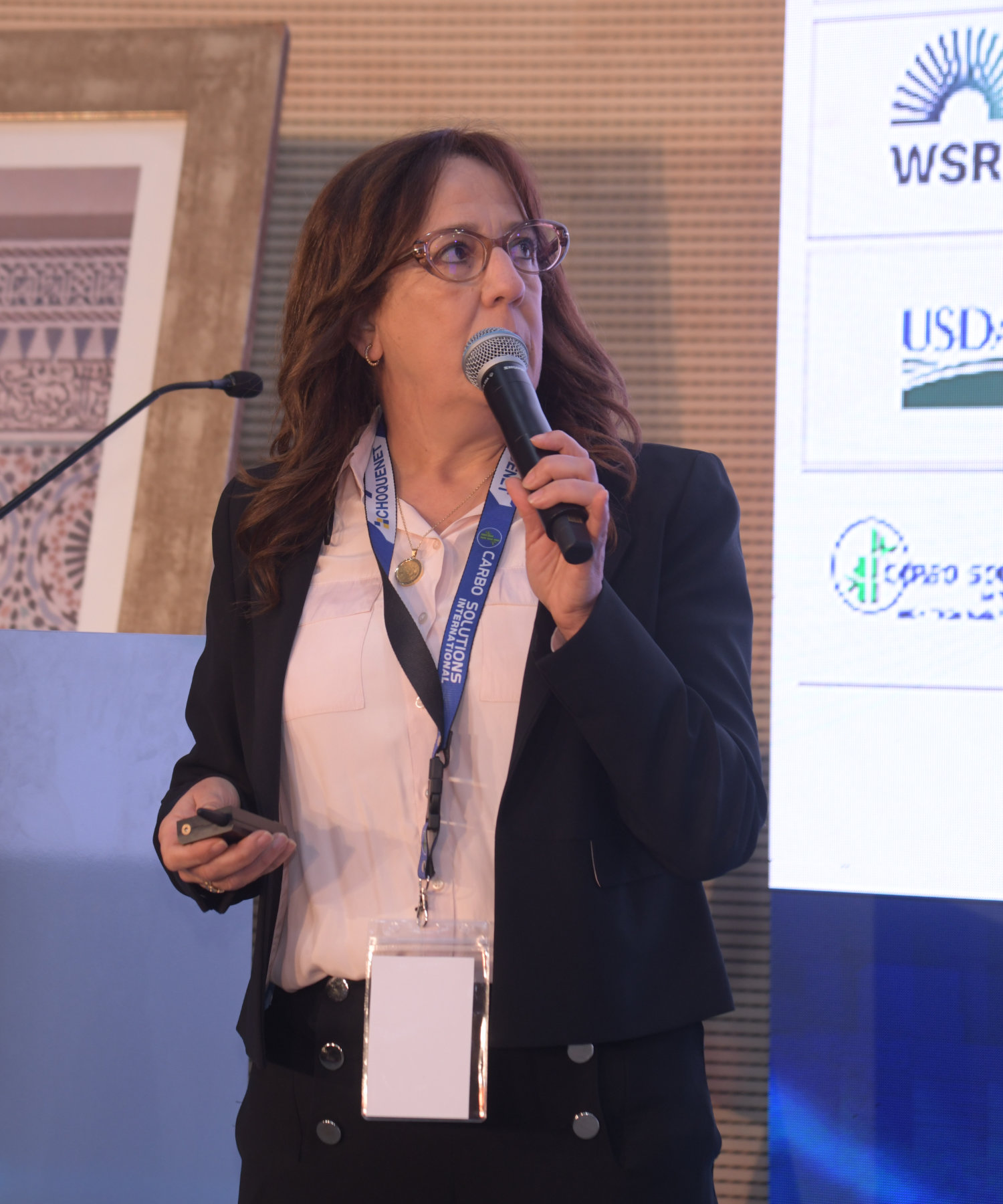 Dr Leila Dziri, Cosumar Leila Dziri presented Cosumar’s Agri 4.0 programme, which integrates thousands of growers through connected platforms that combine drones, IoT sensors, and AI-based irrigation management to optimise water use and crop monitoring under increasingly variable climatic conditions.
Water management emerged as the most tangible application of digitisation. Smart irrigation combines drip systems with soil moisture sensors, weather data, and AI-driven decision models to determine irrigation timing and dosage based on plant requirements rather than fixed schedules. The system applies a “right dose, right time, right place” principle, with automated valve control and remote monitoring allowing irrigation adjustments in response to heatwaves or rainfall variability.
Reported performance indicators suggest significant operational gains, including up to 30% in cost savings, a 25% reduction in pesticide use, around 20% in fertiliser reductions, and substantial process water savings. Beyond efficiency metrics, Cosumar emphasised improvements in farmer income, skills development and system-wide coordination, highlighting digitisation as a socio-economic as well as technical transformation.
Israel Talpaz complemented this approach with SeeTree’s satellite-based analytics, which can detect crop stress and productivity variation at scale. The SeeCane system enables earlier agronomic intervention and improved harvest planning, illustrating how remote sensing and machine learning are becoming practical management tools rather than experimental technologies.
Taken together, the sessions showed digitisation progressing along parallel pathways: factories pursuing operational stability and efficiency, while agriculture adopts data-driven tools to manage biological and environmental uncertainty.
Global biofuels perspective: Brazil’s sugarcane model
Following the digitisation sessions, Eduardo Leão, the Exec Director of UNICA, outlined the role of sugarcane ethanol in global decarbonisation. The presentation positioned biofuels as an immediately deployable solution for reducing transport emissions, highlighting Brazil’s experience with large-scale ethanol adoption and flexible fuel markets. Given that energy is responsible for roughly 73% of global emissions, expanding bioethanol blending was presented as a pragmatic pathway to emissions reduction using existing vehicle fleets.
Improving sucrose recovery
In the last technical paper of the day, Federico Ramirez from Sucrotech emphasised the human dimension of operational performance, arguing that sucrose recovery depends as much on leadership and training as on engineering solutions. The “Sucrose Hunters” approach promotes multidisciplinary teams working across the entire agro-industrial chain to identify both visible and hidden sugar losses, particularly those occurring in process water, effluents and logistics delays.
The second day began by switching the focus to sustainability and resource efficiency as foundational elements for the future of sugar production.
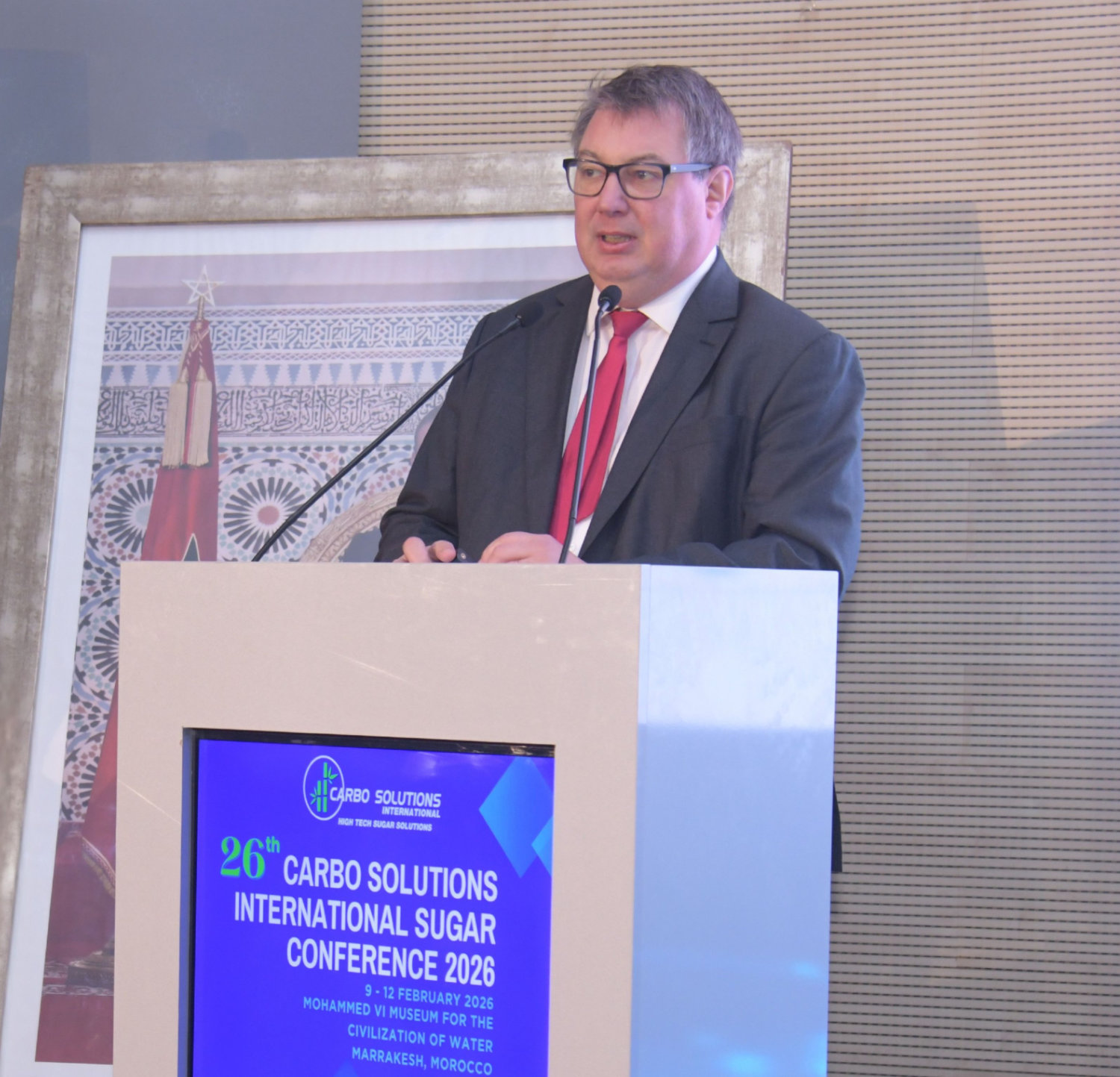 Xavier Astolfi, Cristal Union Day two opened with a keynote lecture from Cristal Union’s CEO, Xavier Astolfi. He outlined how European beet processors are reshaping operations around resource efficiency and long-term decarbonisation. Framed around the cooperative model, the presentation emphasised integrated sustainability “from field to fork,” combining low-carbon agriculture, energy optimisation and circular use of by-products. Life-cycle assessments have guided Cristal Union’s investment priorities, enabling greenhouse gas emissions to be reportedly 40–70% below industry benchmarks, supported by a Science Based Targets Initiative roadmap targeting a 23% reduction in emissions by 2030. Particular emphasis was placed on energy and water autonomy: several factories already operate without external water abstraction, reusing moisture extracted from beets, while investments in energy recovery, biogas, and renewable power aim to deliver energy self-sufficient plants by mid-century. The keynote positioned sustainability not as compliance, but as a competitiveness strategy underpinning the long-term resilience of European sugar production. The company has invested €100 million towards this end.
Sugar refining: Efficiency, circularity and the move toward zero-effluent operations
The refining sessions held across days two and three collectively highlighted a sector undergoing quiet but significant process redesign, with sustainability increasingly pursued through incremental engineering innovation rather than wholesale technological disruption. Two complementary presentations from Carbo Solutions International (CSI) from Emmanuel Sarir and Maricel Labares-Borja, supported by refinery case studies and engineering contributions, focused on reducing operating costs and environmental impact through optimisation of clarification and decolourisation systems.
CSI presented developments in high-performance processing aids designed to enhance carbonatation refining while reducing reliance on conventional technologies such as granular activated carbon or ion-exchange resins. Operational comparisons indicated lower capital and operating costs, along with reduced space and utility requirements, positioning high-performance adsorbents as an economically attractive alternative for refineries seeking simplified process schemes. Industrial implementation in a 1,200-tpd refinery demonstrated successful integration within a zero-effluent design philosophy, achieving significant colour removal while minimising waste streams and chemical consumption.
Complementing this approach, refinery case studies emphasised practical pathways toward closed-loop operations. Referring to the Yemen Sugar Refining Company project, Mohammed Abdulqader Al-Amri illustrated how process redesign, including crystallisation modifications, syrup recycling and tighter raw sugar specifications, enabled complete elimination of ion-exchange effluent while maintaining capacity and achieving yields of approximately 97.6%. Water reuse and reduced steam consumption illustrated how sustainability targets increasingly align with operating cost reductions.
Additional technical contributions reinforced the circular economy theme. At Al Khaleej refinery in Dubai, recalcination of carbonatation mud demonstrated recovery of lime from filter cake waste, converting a disposal liability into reusable quicklime while reducing landfill dependence and CO emissions.
Meanwhile, Mauricio Ruffati, EPI Engineering, noted that engineering concepts, such as compact “micro-refinery” layouts, highlighted growing interest in smaller, modular refining assets designed for flexibility and a reduced environmental footprint.
 S. Somaiya, Godavari Biorefineries; P. Lakshman and Ting Luo, Guangxi Academy of Sciences; A. Denny, WSRO; E. Sarir, CSI (from left to right)
The presentation by Noureddine Haytoumi, Cosumar, outlined lessons from an operational excellence transformation at the Casablanca Sugar Refinery, focusing on safety, process optimisation, maintenance practices and digitalisation to improve reliability and cost performance. Success was driven by disciplined execution, standardised processes and workforce development, supported by structured change management to ensure lasting operational improvements applicable to similar industrial sites.
Taken together, the sessions suggested that the next phase of refinery development will be defined less by single breakthrough technologies than by integrated optimisation, combining chemistry, process engineering and resource recovery to deliver lower-cost, lower-impact sugar production.
Refining panel introduction: Evolution of liquor decolourisation technologies
The sugar refining panel, led by Gary Mustvedt, Sugar Consultants International, opened with a historical perspective on the evolution of liquor decolourisation, illustrating how refining technologies have continuously adapted to changing technical, environmental and market constraints. Beginning with early Chinese clarification methods using mineral suspensions, the presentation traced successive transitions through animal-blood clarification, bone char filtration and granular activated carbon systems, each shaped by emerging environmental, dietary and operational considerations. The more recent adoption of ion-exchange resins introduced new efficiency gains but also raised concerns about brine waste and liquid effluent management. The introduction positioned current innovation, including eco-friendly adsorbent technologies, as part of a long continuum in which refining advances are driven as much by sustainability pressures as by product quality requirements.
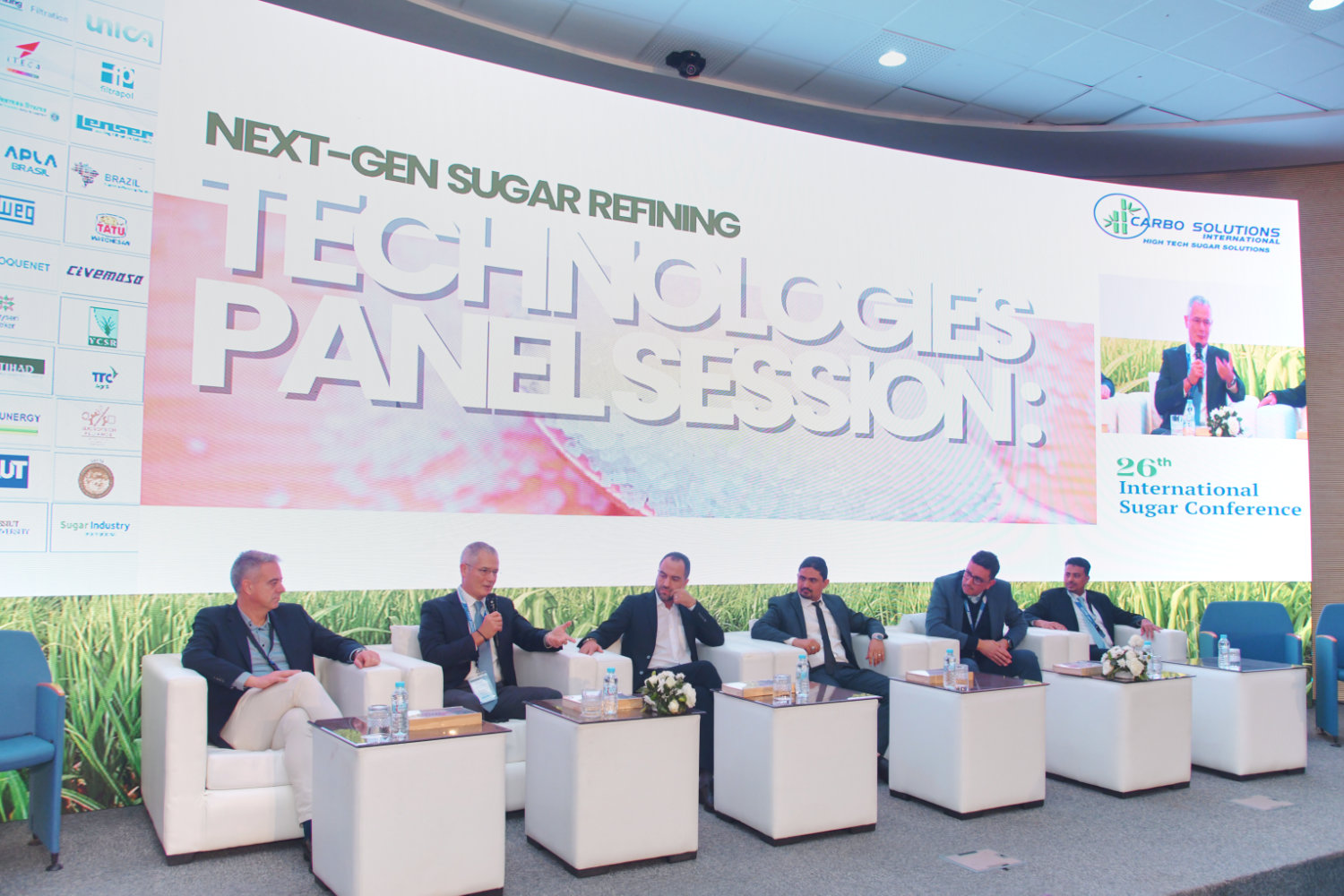 Panel session on Next-Gen Sugar Refining
CEO panel: Digital transformation, operational intelligence and new business models
The CEO panel on the second day comprised the CEO of Cosumar, represented by Abdelhamid Chafai El Alaoui, Samir Somaiya, Godavari Biorefineries and Martin Vesper, Pfeifer&Langen. The questions centred on how sugar producers are adapting to rapid digital transformation across the value chain. Discussion themes ranged from “farm-to-factory” optimisation, integrating field data with milling schedules to maximise sucrose recovery, to the adoption of real-time process control, digital twins and AI-driven optimisation within factories. Predictive maintenance and smart factory concepts were highlighted as key tools for reducing downtime and improving energy efficiency. Beyond technology, several questions addressed organisational challenges, particularly workforce reskilling and the preservation of operational expertise in increasingly automated environments.
Agricultural research: productivity limits and emerging biological risk in beet and cane systems
Growing sugarcane and sugar beet is far more difficult than producing and refining sugar in a factory. The three presentations summed this up well. They highlighted that future sugar supply will increasingly depend on biological resilience rather than incremental process improvements. Across both beet and cane presentations, a recurring theme was the growing gap between production expansion and genuine productivity gains.
Prakash Lakshman’s (Guanxi Academy of Agricultural Sciences) sugarcane breeding analysis provided one of the most strategically significant observations of the conference. Global increases in cane output over recent decades have been driven primarily by expansion of harvested area rather than sustained improvements in yield per hectare, suggesting that productivity growth has stagnated in many major producing regions. More concerning was that production systems in several leading cane-producing countries, namely Brazil, India, Thailand and China, rely on a narrow genetic base, with only eight cultivars dominating planted acreage. This concentration creates systemic vulnerability: widespread adoption of genetically similar varieties increases exposure to emerging diseases and pest infestations that may spread rapidly and prove difficult to control once established. The presentation, therefore, framed breeding not simply as yield improvement, but as risk mitigation essential to global supply stability.
A historical perspective from Ian Munnery, United Beet Seeds, traced two centuries of sugar beet evolution, illustrating steady genetic progress that has transformed yields through advances in breeding, agronomic resilience and processing-oriented traits such as nitrogen-use efficiency, impurity reduction and stress tolerance. The presentation emphasised that future gains will rely less on yield expansion alone and more on stability under environmental stress.
Parallel research in sugar beet reinforced the importance of biological management. Melvin Bolton, Research Leader at USDA, highlighted their work on Cercospora leaf spot. He demonstrated that identifying latent infection stages enables better fungicide timing, improved recoverable sucrose, and reduced resistance pressure. Advances in genomics and microbiome research are opening pathways toward biologically based disease control strategies.
Complementary contributions from Ali Fehmi, Soygenis, emphasised resource efficiency, particularly smart water management and precision irrigation, highlighting how agronomic practices must adapt alongside genetics to sustain sugar beet productivity under increasing water constraints.
Taken together, the sessions underscored a clear message: future sugar production risks may arise less from markets or processing constraints than from biological fragility within modern cropping systems.
Sugar and health
The second day concluded with a presentation from Annie Denny, WSRO, examining sugar’s evolving role within nutrition policy and public health debates. The discussion emphasised that sugar’s contribution to diets must be considered within overall dietary patterns rather than isolated nutrient targets. Evidence presented suggested that while sugar intakes have declined in several countries, obesity rates have continued to rise, highlighting the multifactorial nature of diet-related disease.
Water management and climate resilience: collaborative adaptation in Colombia
Ahead of the panel discussion on water use, José Orive presented a case study from Colombia’s Risaralda sugar region illustrating how climate resilience increasingly depends on collective infrastructure rather than individual farm measures. Following severe flooding events that halted mill operations and affected over 10,000 hectares, producers established ASONORTE, a private land-improvement district that coordinates drainage, flood protection, and watershed management across nearly 24,000 hectares. Investments in canals, pumping stations and early-warning systems have dramatically reduced flood exposure while protecting productivity and rural communities, demonstrating how coordinated water governance is becoming central to sustainable cane production under increasingly volatile climatic conditions.
Markets, history and investment: understanding sugar’s structural economics
Three contrasting presentations on the third day approached the sugar sector from market, historical and investment perspectives, collectively illustrating how today’s industry dynamics remain deeply shaped by long-term structural forces.
Soumia Lotfi, Monetary Fund, provided a forward-looking assessment of the global sugar market, highlighting the transition toward a modest surplus following strong production growth in Brazil and India and softer ethanol demand linked to lower crude oil prices. Global consumption is projected to continue expanding, driven primarily by Asia and Africa, while increasing diversion of sugar crops to ethanol, expected to reach roughly 24% by 2034, will remain a central source of price volatility. The presentation stressed the growing influence of policy, energy markets and sustainability regulation on future market stability.
A historical analysis by Michael Levitz, Sucden, placed current developments in context, tracing how geopolitical events, energy crises, and policy shifts reshaped trade flows over decades. The emergence of Brazil as the dominant exporter, the decline of Cuba, EU market reform and the rise of destination refining were shown to have fundamentally reorganised global supply chains and export concentration.
Finally, Patrick Chatenay, ProSunergy, examined investment economics within the industry, arguing that sugar production remains highly capital-intensive and structurally dependent on scale, automation and policy support.
Global priorities for sugar research: Collaboration and applied innovation
The final panel session, led by Darryn Rackemann, Queensland University of Technology, addressed global priorities for sugar research, emphasising that future innovation will depend less on isolated breakthroughs and more on stronger collaboration across the industry’s research ecosystem. Darryn highlighted how sugar technology has evolved incrementally over more than two centuries, with research historically driven by cost reduction, product quality and resource efficiency, themes that remain central as the sector confronts decarbonisation and energy transition challenges. Particular attention was given to the beet sector’s need to achieve carbon-neutral steam and power generation without access to bagasse, which accelerated interest in electrification, heat pumps, and renewable energy integration.
Panellist Bernd-Christoph Schulze, Escon, stressed that effective research must link universities, producers, suppliers and factory practitioners. Federico Ramirez, Sucrotech, argued that valuable innovation frequently originates within operating plants themselves, where detailed process analysis can uncover performance gains often overlooked by formal research programmes. Priorities identified included improved cane quality management, energy efficiency and better measurement of real sucrose losses using advanced analytical tools.
Collectively, the discussion framed sugar research as an increasingly collaborative, application-driven endeavour, focused on integrating agricultural, industrial, and energy solutions to ensure long-term sector resilience.
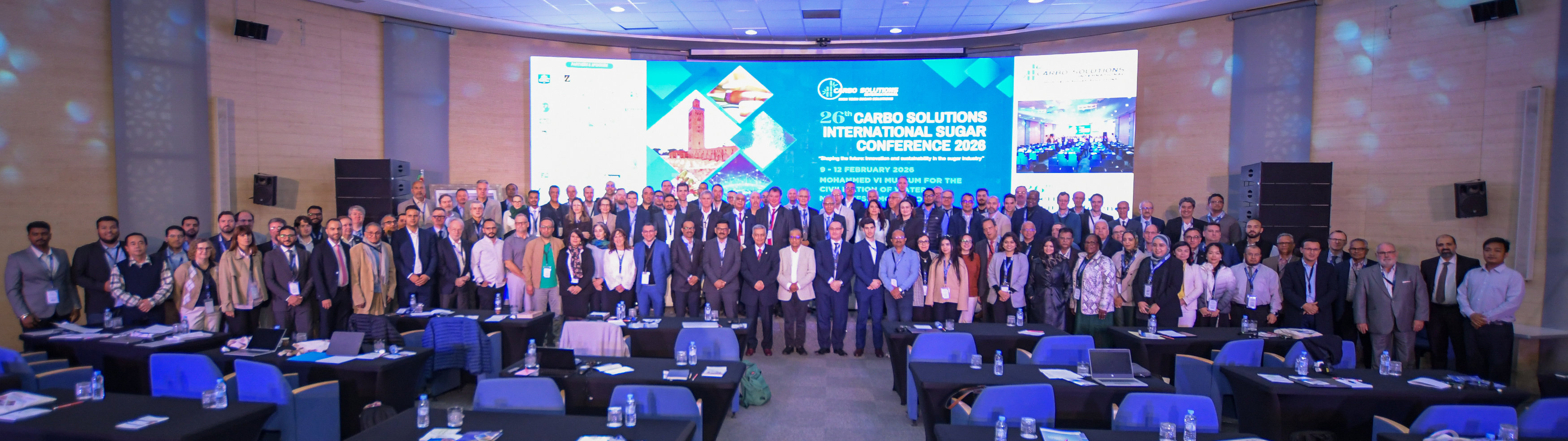 Conference delegates
Diversification: Positioning sugar within the emerging bioeconomy
Two presentations examined diversification as a strategic response to market volatility and sustainability pressures, arguing that future growth lies beyond traditional sugar production. José Orive outlined diversification as central to long-term resilience, highlighting expanding opportunities in bioenergy, including ethanol, biogas, cogeneration, sustainable aviation fuel and green hydrogen, positioning the sugar sector as a potential bioeconomy powerhouse built on biomass utilisation and circular resource use.
Complementing this macro perspective, Arvind Chudasama, Sugar Industry International, explored commercial pathways into biobased chemicals, biomaterials, and fermentation-derived products, showing how sugar feedstocks increasingly serve as platforms for replacing petrochemical products, supported by growing global investment and industrial-scale biomanufacturing projects.
Concluding thought
Beyond the individual presentations and technical discussions, the CSI conference served as a reminder of why industry gatherings remain essential to the evolution of the global sugar sector. At a time when producers face simultaneous pressures from climate variability, digital transformation, market volatility and changing public demands, progress depends increasingly on shared learning and collaborative problem-solving across the entire value chain, from field to factory to refining. Conferences such as this help inspire technologists, encourage the exchange of practical experience, and strengthen the collaborative leadership needed to guide the industry through transition. Ultimately, the key takeaway was clear: sustaining a competitive sugar industry requires harmonizing economic performance with environmental stewardship and social responsibility, advancing the triple bottom line that will define the sector’s long-term relevance and resilience.
 Delegates touring the Sidi Bennour refinery